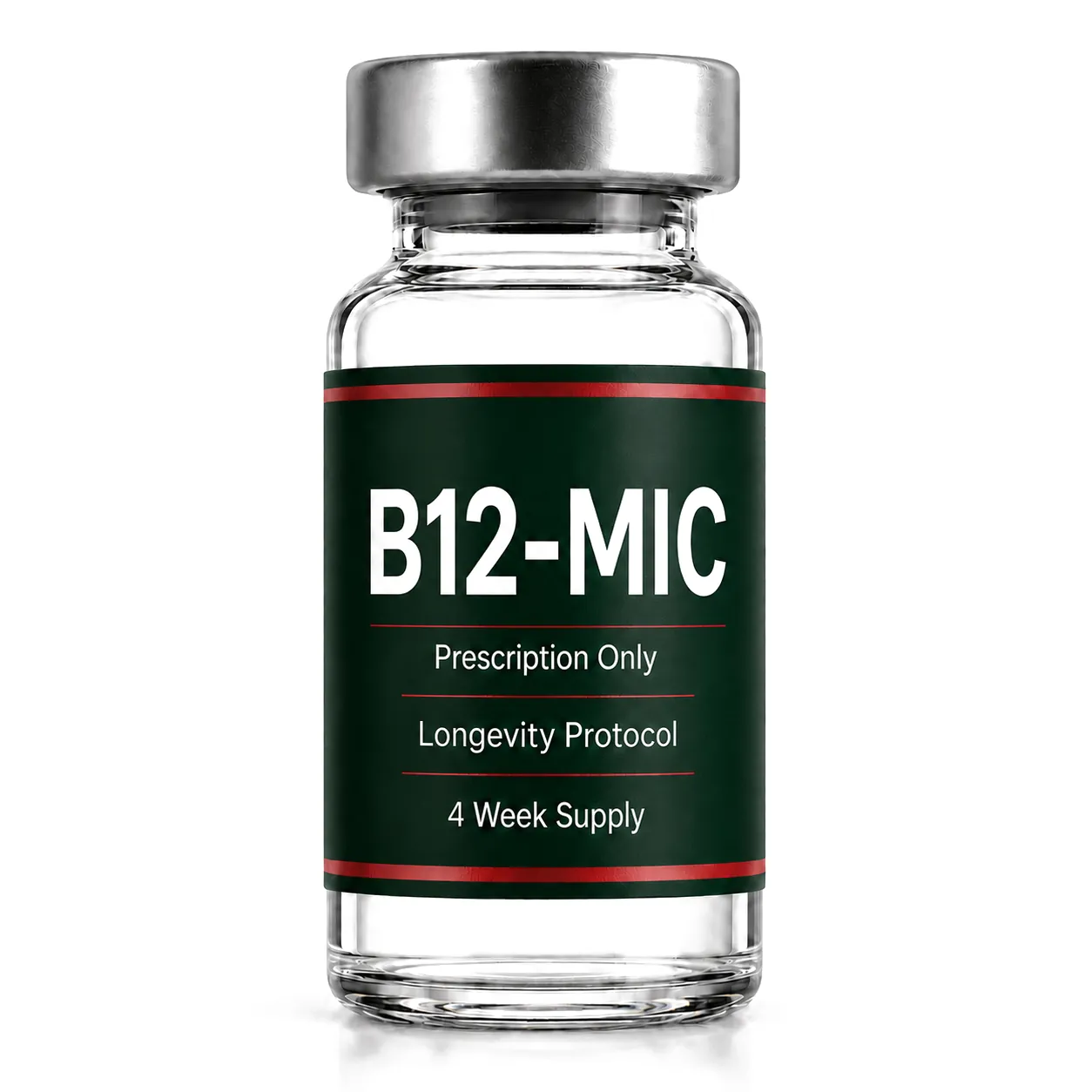
What is B12?
Vitamin B12 (also called cobalamin) is an essential nutrient. Your body can't make it, so it has to come from food or supplements. It's needed to make red blood cells, keep your nerves healthy, and turn the food you eat into energy.
Your body stores some B12 in the liver, which is why low levels can creep up slowly over months or years before you notice.
What it does in your body
B12 has three big jobs. Watch them play out:
- 1
Build
B12 helps your bone marrow make healthy red blood cells.
- 2
Carry
Those cells carry oxygen to every part of your body.
- 3
Power
More oxygen and healthy nerves mean steadier energy and a clearer head.
Blood. Your bone marrow needs B12 to make healthy red blood cells, the cells that carry oxygen everywhere.
Nerves. B12 helps build and protect myelin, the coating that keeps nerve signals fast and clear.
Energy. It helps your cells turn fats and proteins into usable energy.
Why levels run low
Plenty of people eat enough B12 but still don't absorb enough. Pulling it out of food takes stomach acid and a protein called intrinsic factor, and both can fall short.
Injection goes straight in
B12 from pills has to make it through your gut first. Absorption drops with age, low stomach acid, and some common medications.
Illustrative comparison. Individual absorption varies.
The most common reasons levels run low:
Diet
B12 comes almost entirely from animal foods, so vegans and vegetarians often fall short.
Age
Stomach acid drops as you get older, and you need it to pull B12 out of food.
Common medications
Metformin and acid reducers (PPIs, H2 blockers) are linked to lower B12 over time.
Gut issues
Conditions like celiac disease, Crohn's, or past stomach surgery can block absorption.
Low B12 often looks like "just being tired." That's why it's so easy to miss for years.
Signs your B12 may be low
Low B12 builds slowly, so the signs are easy to brush off. Tap any that sound like you.
Tap the ones that apply.We'll tell you what it might mean.
Start nowThese signs have many possible causes and aren't a diagnosis. Only a licensed provider can evaluate you.
Ways to get more B12
There are four main ways to get B12. How much actually reaches your blood is what matters.
Meat, fish, eggs, and dairy are the main natural sources of B12.
- Free with a balanced diet
- Comes with other nutrients
- Hard to get enough on a plant-based diet
- Absorption falls with age
Best for: People who eat animal foods and absorb well
Over-the-counter B12 supplements.
- Cheap and easy to find
- Has to get through your gut first
- Only a small share of a big dose is absorbed
- No medical oversight
Best for: People with a healthy gut who just need a little extra
B12 plus methionine, inositol, and choline, prescribed by a licensed provider and taken at home.
- Skips the gut entirely
- Adds three lipotropic nutrients
- Provider-prescribed, shipped to you
- Requires a prescription
- A small weekly injection
Best for: People who want reliable levels and real energy
B12 injections given at a clinic or med spa.
- Given by a nurse
- An appointment every time
- Often plain B12, no MIC blend
Best for: People who don't mind regular clinic visits
What's in B12-MIC
Tides B12-MIC is more than plain B12. It combines four nutrients in one weekly injection:
- B12
Vitamin B12
Energy, red blood cells, and nerve health.
- M
Methionine
An amino acid that helps your liver process fat.
- I
Inositol
Supports how your body uses fat and insulin.
- C
Choline
Helps move fat out of the liver and supports focus.
What to expect
B12 often works faster than people expect, especially if you started low.
- Day 1
Take a 5-minute online assessment
A licensed provider reviews it. No appointment, no waiting room.
- Week 1
Your B12-MIC arrives
It ships straight to your door. Start your weekly routine.
- Weeks 2–4
Energy starts to lift
Most people notice more energy and a clearer head in this window.
- Month 2+
Your new normal
Steadier energy day to day, especially if you started low.
- Ongoing
Stay consistent
Your provider checks in and adjusts your protocol as needed.
Individual results vary. Your licensed provider will help you set realistic expectations.
Safety & side effects
B12 is one of the most studied vitamins there is, and because it's water-soluble, your body clears what it doesn't need.
Common and mild
- Redness or soreness where you inject
- Mild headache
- Mild nausea
- Rarely, a temporary skin rash
Talk to your provider first if you
- Are pregnant or breastfeeding
- Have a cobalt or cobalamin allergy
- Have Leber's disease (an eye condition)
- Take prescription medications
Every Tides prescription starts with a licensed provider reviewing your health history, and they stay with you throughout your protocol.
B12, NAD+ and peptides
B12 is a vitamin, not a peptide, but it's a natural teammate for both NAD+ and peptide therapy. B12 keeps your blood and nerves supplied. NAD+ fuels energy inside your cells. A peptide like Sermorelin supports sleep and recovery.
Quick answers
Further reading
- Office of Dietary Supplements, National Institutes of Health. Vitamin B12: Fact Sheet for Health Professionals.
- Stabler SP. Vitamin B12 deficiency. New England Journal of Medicine, 2013.
- Langan RC, Goodbred AJ. Vitamin B12 deficiency: recognition and management. American Family Physician, 2017.
- O'Leary F, Samman S. Vitamin B12 in health and disease. Nutrients, 2010.
This guide is for education only and isn't medical advice. Always talk to a licensed healthcare provider before starting any treatment.