What is NAD+?
NAD+ (short for nicotinamide adenine dinucleotide) is a helper molecule, called a coenzyme, found in every living cell in your body. Your cells can't make energy, repair damage, or handle stress without it.
It works in a loop. NAD+ picks up energy from the food you eat, becomes NADH, and hands that energy off inside your cells. Then it turns back into NAD+ and does it again. That cycle never stops, in trillions of cells, every second of your life.
What it does in your body
NAD+ has three big jobs. Watch them play out in a single cell:
- 1
Refill
NAD+ tops up the supply your cells lose with age.
- 2
Recharge
Mitochondria use it to turn food into energy (ATP).
- 3
Repair
It fuels the enzymes that fix DNA and support healthy aging.
Energy. Inside your mitochondria, NAD+ shuttles energy from food into ATP, the fuel every cell runs on. Less NAD+ means less fuel.
Repair. Enzymes called PARPs use NAD+ to fix the small bits of DNA damage your cells pick up every day.
Healthy aging. Proteins called sirtuins, which help regulate how your cells age, can't switch on without NAD+.
Why levels drop with age
Research shows NAD+ levels fall steadily over time, often to around half of what they were in your 20s by middle age.
Less NAD+ by age 50
That drop shows up as fatigue, brain fog, and slower recovery.
Illustrative of the age-related decline described in published research.
It isn't one thing. A few changes stack up:
Repair work goes up
As DNA damage and inflammation build over the years, repair enzymes burn through more NAD+.
An enzyme called CD38 rises
Research links an age-related rise in CD38 to much of the decline. Its job is to break NAD+ down.
Recycling slows
Your cells get less efficient at recycling NAD+ back into use.
Lifestyle adds up
Heavy drinking, poor sleep, too much sun, and chronic stress all draw it down faster.
You don't run out of NAD+ overnight. It slips a little each decade, and most people chalk it up to "just getting older."
Signs your levels may be low
There's no at-home test for NAD+, but these are the everyday things people often notice. Tap any that sound like you.
Tap the ones that apply.We'll tell you what it might mean.
Start nowThese signs have many possible causes and aren't a diagnosis. Only a licensed provider can evaluate you.
Ways to raise NAD+
There are four main routes. They aren't all equal, and they work best together.
Exercise, good sleep, and cutting back on alcohol all help your body make and recycle NAD+. It's free and it helps everything else too.
- Free, and good for your whole body
- Aerobic exercise and interval training are especially helpful
- A gentle effect on its own
- Hard to fully offset age-related decline
Best for: Everyone, as a foundation
Over-the-counter building blocks your body converts into NAD+.
- Inexpensive and easy to find
- Some research shows they raise NAD+ levels
- Quality and dose vary between brands
- Must be converted first
- No medical oversight
Best for: People who want a low-cost starting point
The NAD+ molecule itself, dosed by a licensed provider. At Tides, you choose an injection, a nasal spray, or oral drops.
- Direct: no conversion step
- Provider-prescribed and supervised
- Taken at home in seconds, shipped to you
- Requires a prescription
- Costs more than supplements
Best for: People who want real results with medical oversight
A high-dose NAD+ drip given in a clinic.
- Delivers a large dose at once
- Hours in a chair per session
- Often hundreds of dollars per visit
- Flushing or nausea if infused quickly
Best for: People who don't mind clinic visits
Injection vs. spray vs. drops
All three Tides forms raise your NAD+ levels. The difference is how you take it and how often.
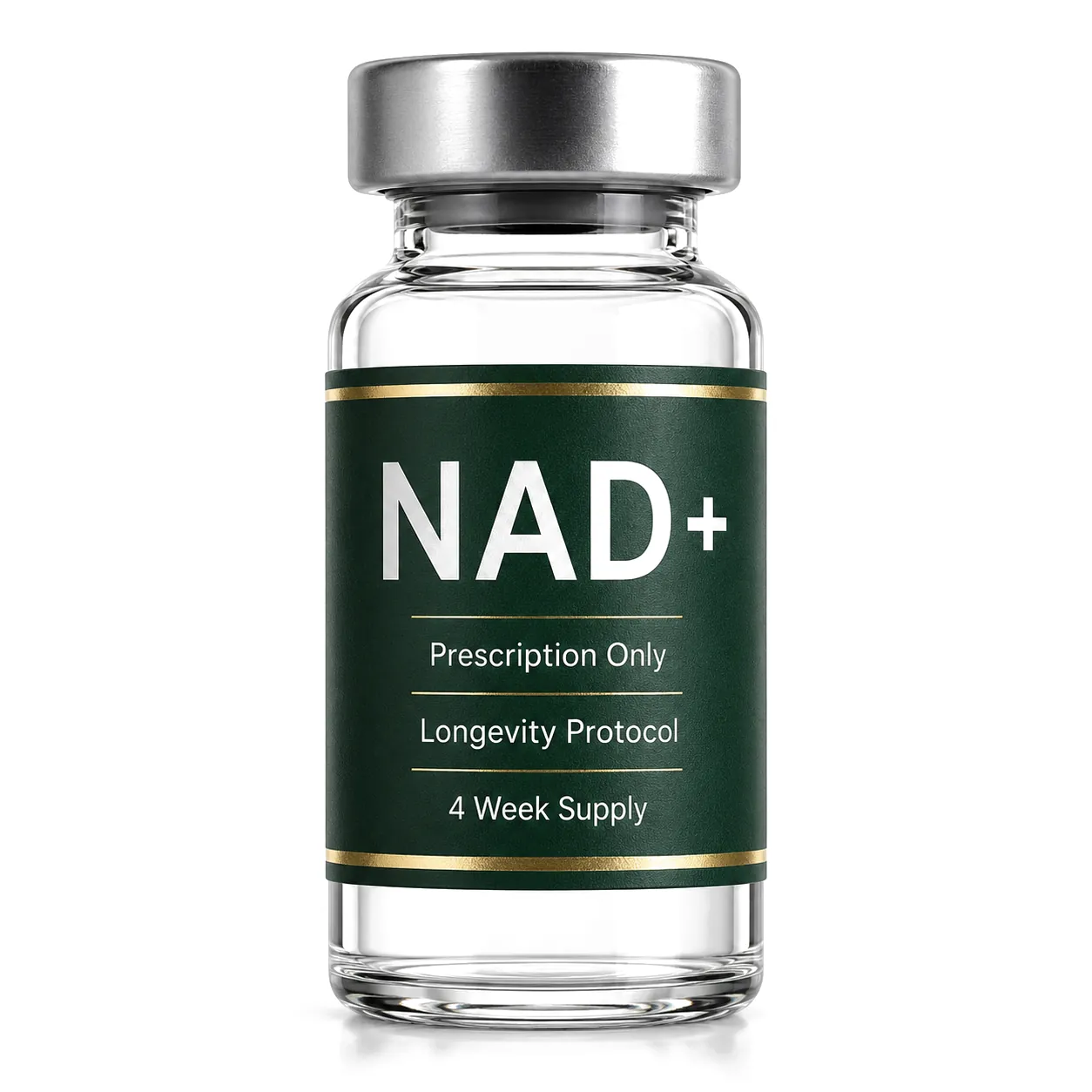
Injection
A quick subcutaneous shot. The most direct route.
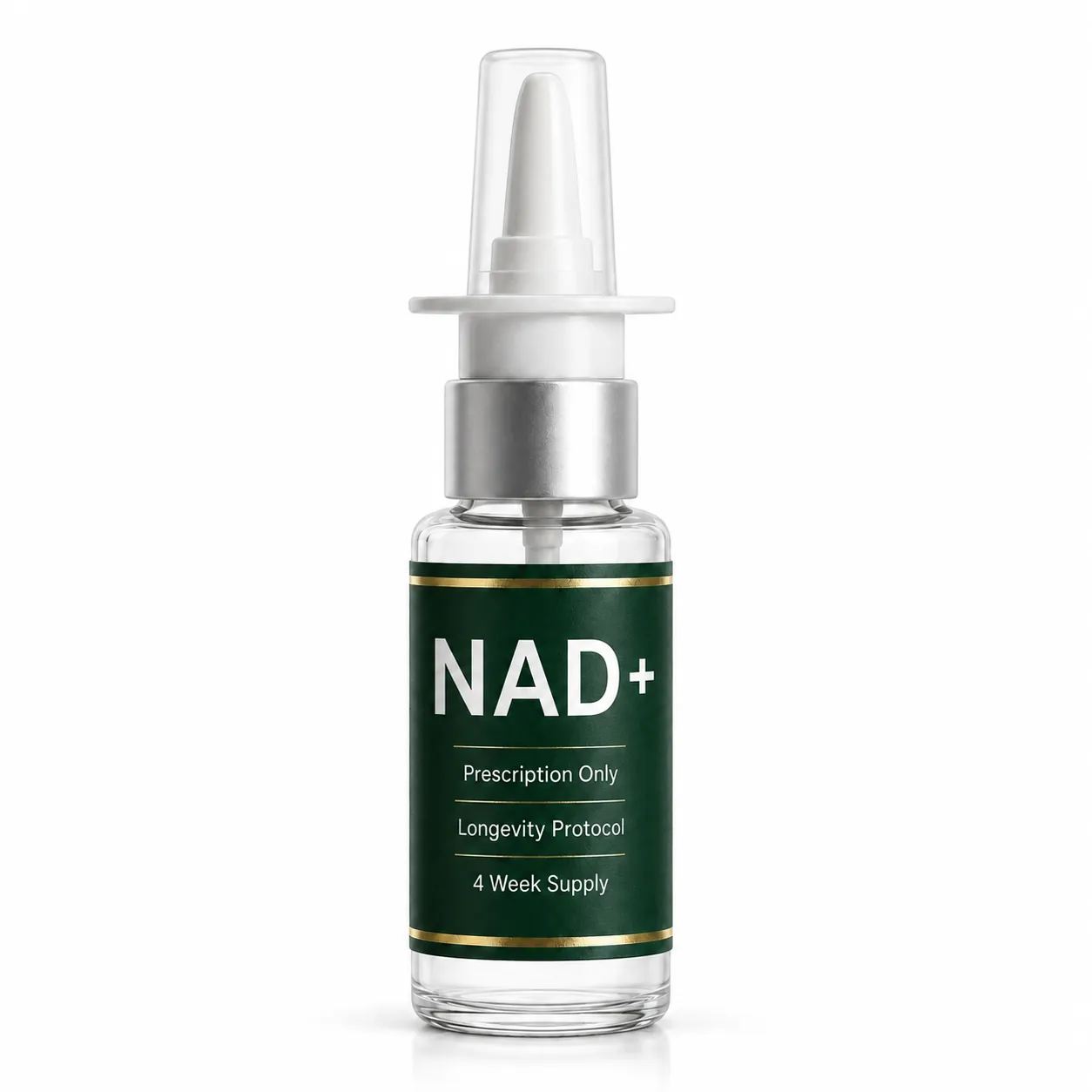
Nasal spray
One spray, no needles. Absorbs through the nasal lining.
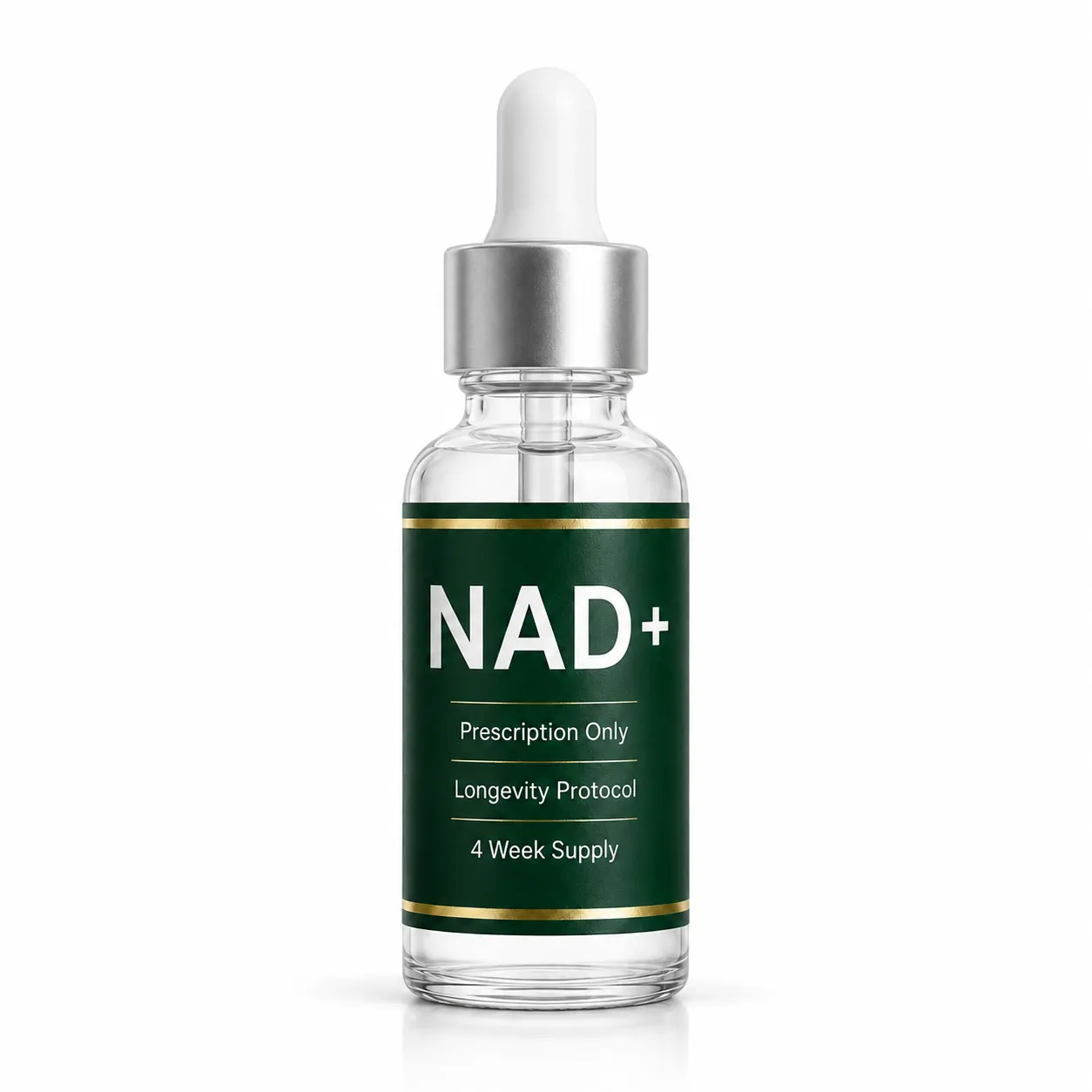
Oral drops
A few drops under the tongue. The simplest habit.
What to expect
NAD+ isn't a quick hit. It works in the background, and the benefits build week by week.
- Day 1
Take a 5-minute online assessment
A licensed provider reviews it. No appointment, no waiting room.
- Week 1
Your NAD+ arrives
It ships straight to your door. Start your routine.
- Weeks 2–4
Some people notice it early
Less like caffeine, more like not running on empty.
- Weeks 4–8
Most people feel the difference
Steadier energy and clearer focus are the most common changes.
- Month 3+
Benefits build with consistency
Your provider checks in and adjusts your protocol as needed.
Individual results vary. Your licensed provider will help you set realistic expectations.
Safety & side effects
NAD+ is a molecule your body already makes, and it's been studied for years. Most side effects are mild and fade as your body adjusts.
Common and mild
- Redness or tenderness where you inject
- A brief feeling of warmth or flushing
- Mild nausea
- Headache
Talk to your provider first if you
- Are pregnant or breastfeeding
- Have, or have had, cancer
- Take prescription medications
- Have a chronic health condition
Every Tides prescription starts with a licensed provider reviewing your health history, and they stay with you throughout your protocol to adjust your dose if needed.
NAD+ and peptides
You'll often hear NAD+ talked about alongside peptide therapy. Technically, NAD+ isn't a peptide. Peptides are short chains of amino acids, and NAD+ is a coenzyme. But they're a natural pair.
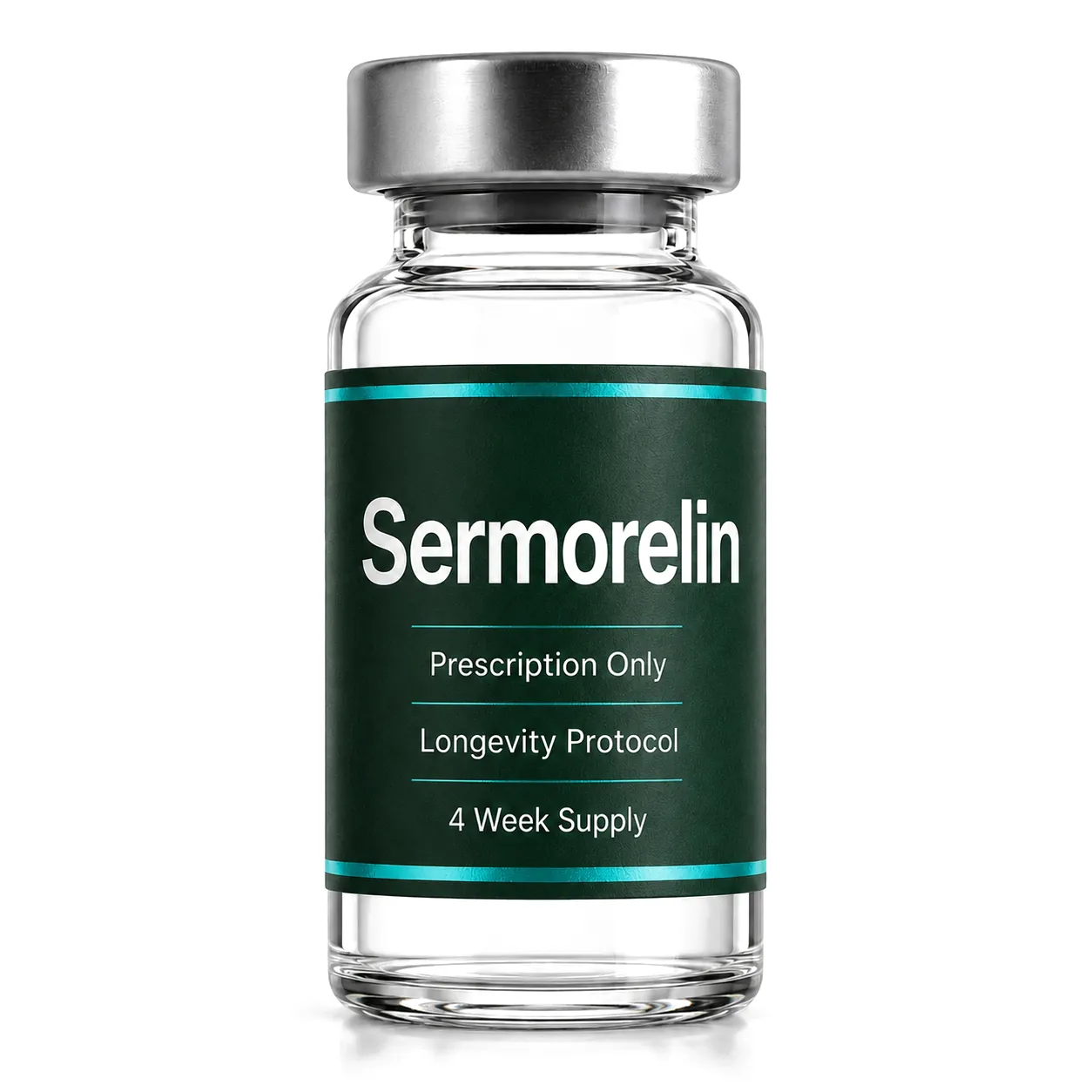
NAD+ works at the level of cellular energy. A peptide like Sermorelin works as a signal, prompting your body to make more of its own growth hormone for sleep and recovery. Many people stack the two for a more complete protocol.
Quick answers
Further reading
- Covarrubias AJ, Perrone R, Grozio A, Verdin E. NAD+ metabolism and its roles in cellular processes during ageing. Nature Reviews Molecular Cell Biology, 2021.
- Rajman L, Chrzanowska K, Sinclair DA. Therapeutic potential of NAD-boosting molecules: the in vivo evidence. Cell Metabolism, 2018.
- Camacho-Pereira J, et al. CD38 dictates age-related NAD decline and mitochondrial dysfunction through an SIRT3-dependent mechanism. Cell Metabolism, 2016.
- Massudi H, et al. Age-associated changes in oxidative stress and NAD+ metabolism in human tissue. PLoS One, 2012.
- Verdin E. NAD+ in aging, metabolism, and neurodegeneration. Science, 2015.
This guide is for education only and isn't medical advice. Always talk to a licensed healthcare provider before starting any treatment.