What is semaglutide?
Semaglutide is a GLP-1 medication. It copies GLP-1, a hormone your gut naturally releases after you eat to tell your brain you're full. Semaglutide lasts much longer than your own GLP-1, so that "I'm full" signal stays on all week.
It's the same active ingredient found in Ozempic and Wegovy. At Tides, it's compounded by a licensed US pharmacy and prescribed by a licensed provider.
How it works in your body
Semaglutide works in three places. Watch them light up:
- 1
Quiet the hunger
Semaglutide reaches your brain's appetite center and turns down cravings and "food noise."
- 2
Feel full longer
It slows how fast your stomach empties, so smaller meals keep you satisfied.
- 3
Steady blood sugar
It helps your pancreas release insulin when you eat, smoothing out spikes and crashes.
Brain. It turns down the appetite center, so cravings and constant thoughts about food get quieter.
Stomach. It slows how fast your stomach empties, so you feel full on less food, for longer.
Pancreas. It helps release insulin when you eat, which smooths out blood sugar spikes and crashes.
Why losing weight is so hard
If you've lost weight before and watched it come back, it wasn't a lack of willpower. In clinical trials, lifestyle changes alone led to about 2% weight loss. Adding semaglutide took that to about 15%.
Average weight loss in clinical trials*
In the STEP 1 trial, people on semaglutide lost about 15% of their body weight over 68 weeks, compared with about 2% on placebo.
*Average results from a clinical trial of the FDA-approved medication plus lifestyle changes. Compounded medications were not studied in this trial. Individual results vary.
Here's what you're up against when you diet on your own:
Hunger fights back
When you eat less, your body turns up hunger hormones to try to win the weight back.
Metabolism slows
Your body burns fewer calories after weight loss, a process called metabolic adaptation.
Food noise
Constant thoughts about food make every meal a willpower battle.
Sleep and stress
Poor sleep and chronic stress raise cravings and make fat harder to lose.
Dieting asks you to out-willpower your own biology. GLP-1 medication works with it instead.
Is it right for you?
Semaglutide isn't for everyone. Tap any of these that sound like you.
Tap the ones that apply.We'll tell you what it might mean.
Start nowThese signs have many possible causes and aren't a diagnosis. Only a licensed provider can evaluate you.
Your weight loss options
There are four main paths. Here's how they compare.
Eating fewer calories and moving more. The foundation of any plan.
- Free and good for your whole body
- Builds habits that last
- Hunger hormones push back
- Most people regain the weight
Best for: Everyone, as a foundation
A GLP-1 medication taken as a weekly injection or daily tablet.
- About 15% average loss in trials*
- Quiets hunger and food noise
- Injection or needle-free tablet
- Requires a prescription
- Digestive side effects early on
Best for: Most people starting GLP-1 therapy
A dual GLP-1 + GIP medication taken as a weekly injection.
- Up to 21% loss in trials*
- Acts on two hunger hormones
- One shot a week
- Requires a prescription
- Costs more than semaglutide
Best for: People who want the strongest effect
Bariatric surgery like a gastric sleeve or bypass.
- Large, lasting weight loss
- Major surgery and recovery time
- Permanent changes to your digestion
- Expensive
Best for: Severe obesity, under a surgical team
Injection or tablet?
Semaglutide comes in two forms at Tides. Both are the same medicine; the difference is your routine.
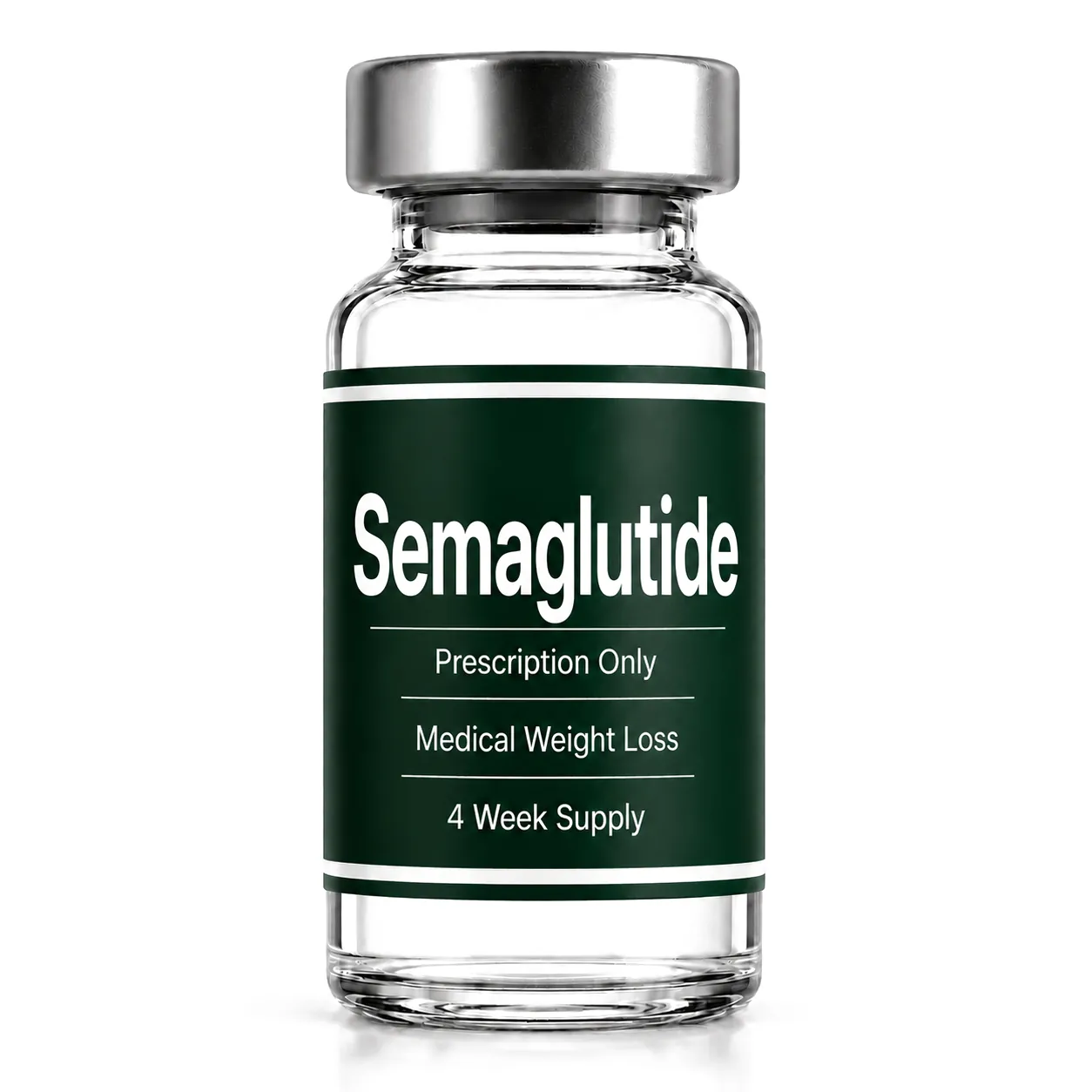
Injection
A quick shot at home. The most common route.
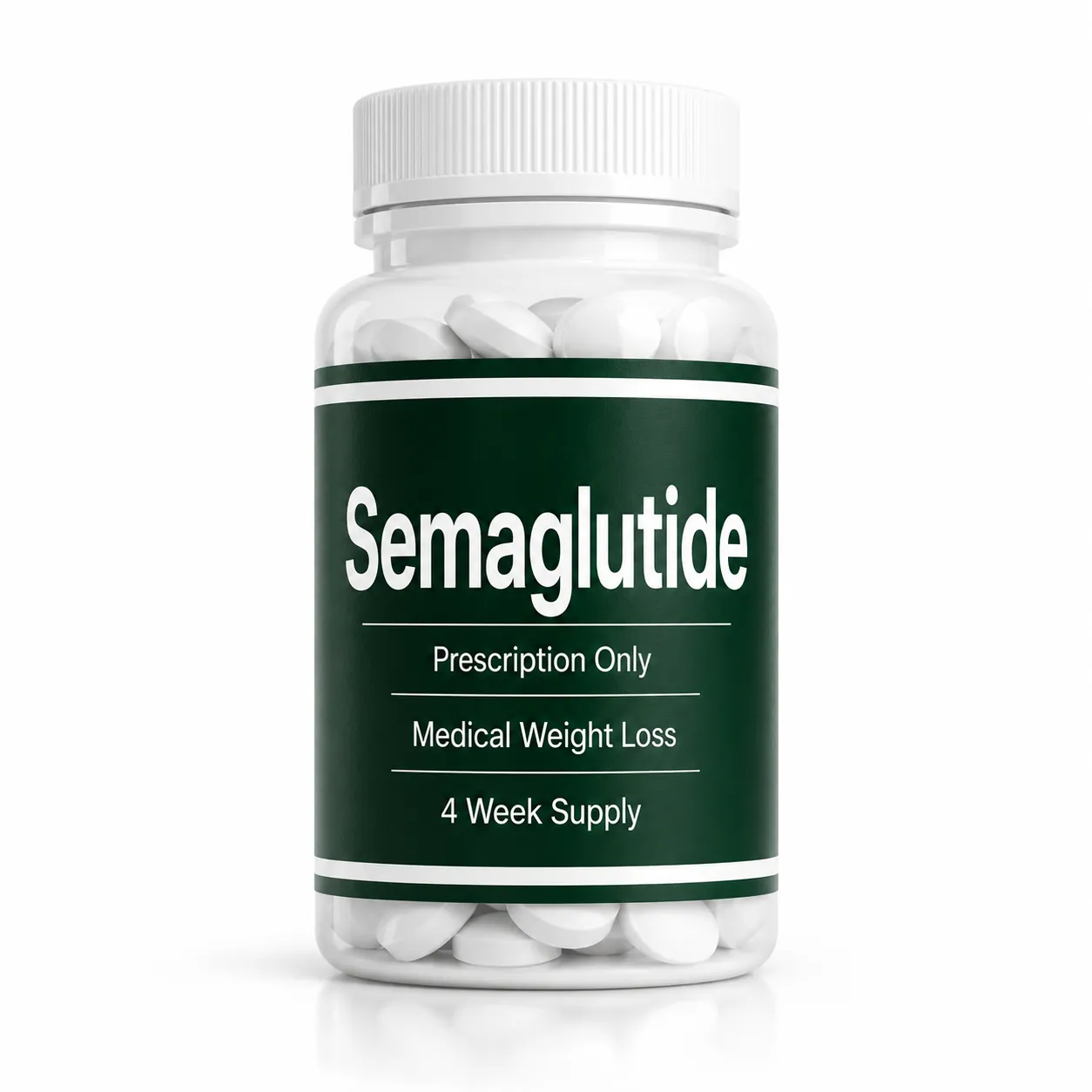
Tablet
One dissolvable tablet. No needles, ever.
What to expect
GLP-1 treatment starts low and builds gradually. Here's the typical path.
- Day 1
Take a 5-minute online assessment
A licensed provider reviews it. No appointment, no waiting room.
- Weeks 1–4
Start on a low dose
Your semaglutide arrives. Many people notice less hunger within the first one to two weeks.
- Months 2–3
Your dose steps up
Your provider increases it gradually, which keeps side effects manageable.
- Months 3–6
Progress you can see
Meaningful weight loss typically shows up between weeks four and eight, and keeps building.
- Month 6+
Build habits that last
Smaller portions start to feel normal. Your provider helps you plan for the long term.
Individual results vary. Your licensed provider will help you set realistic expectations.
Safety & side effects
Semaglutide has been studied in large clinical trials. Most side effects are digestive, mild to moderate, and ease as your body adjusts. Starting low and increasing slowly helps a lot.
Common and mild
- Nausea, especially early on
- Constipation or diarrhea
- Heartburn or burping
- Feeling full quickly
Not right for you if you
- Have a personal or family history of medullary thyroid cancer or MEN 2
- Have had pancreatitis
- Are pregnant or planning a pregnancy
- Take insulin or other diabetes medication (tell your provider first)
Every Tides prescription starts with a licensed provider reviewing your full health history. They check in as your dose increases and adjust if side effects get in the way.
Semaglutide + B12
When you're eating less, it's easier to fall short on some nutrients, and many people notice lower energy early on. That's why semaglutide pairs so well with B12-MIC: B12 supports steady energy, and the MIC nutrients help your body process fat.
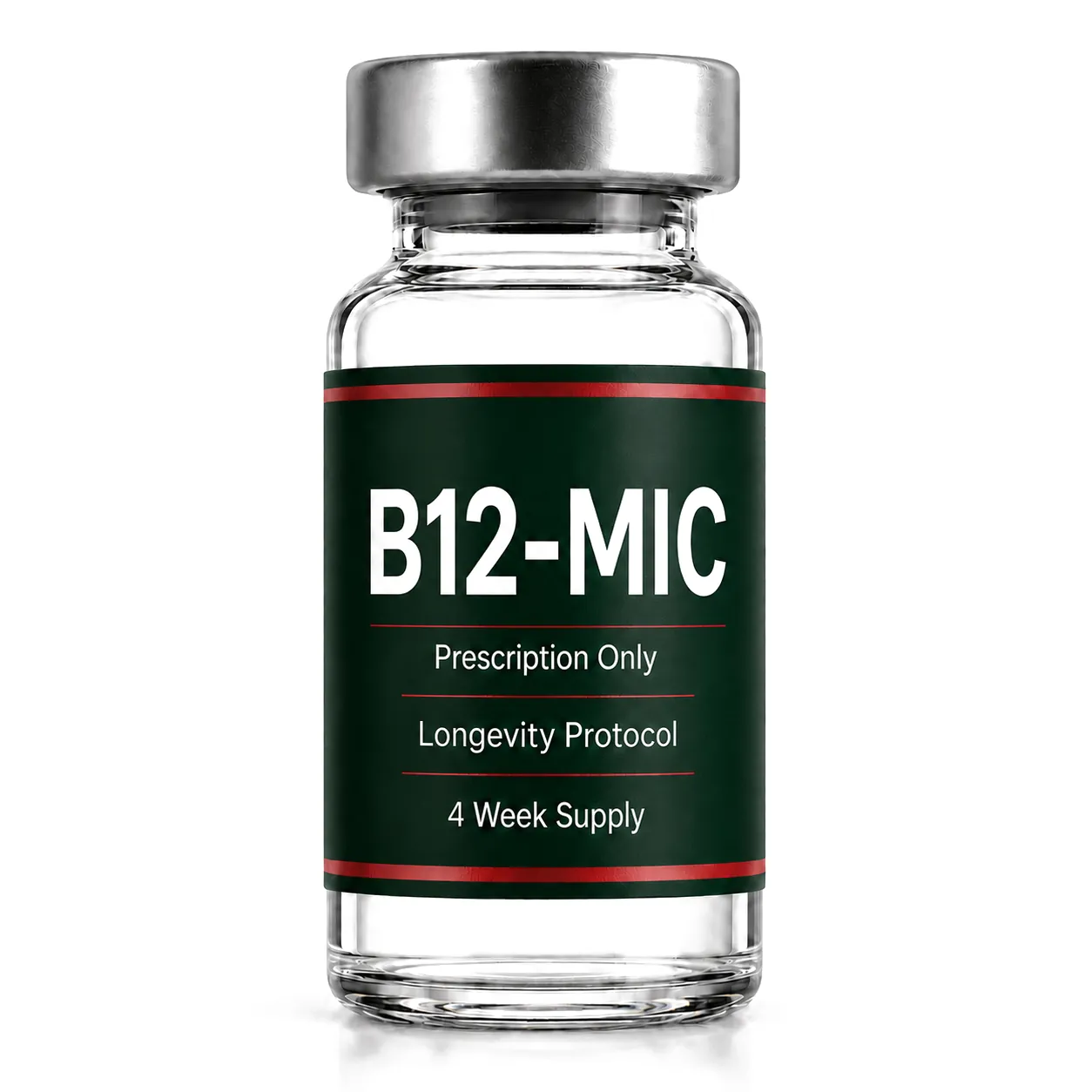
Prefer an all-in-one? Our microdose options combine a lower GLP-1 dose with NAD+, B12, or L-Carnitine in a single weekly injection. Ask your provider if one fits you.
Quick answers
Further reading
- Wilding JPH, et al. Once-weekly semaglutide in adults with overweight or obesity (STEP 1). New England Journal of Medicine, 2021.
- Rubino D, et al. Effect of continued weekly subcutaneous semaglutide vs placebo on weight loss maintenance (STEP 4). JAMA, 2021.
- Knop FK, et al. Oral semaglutide 50 mg taken once per day in adults with overweight or obesity (OASIS 1). The Lancet, 2023.
- Drucker DJ. Mechanisms of action and therapeutic application of glucagon-like peptide-1. Cell Metabolism, 2018.
This guide is for education only and isn't medical advice. Always talk to a licensed healthcare provider before starting any treatment.