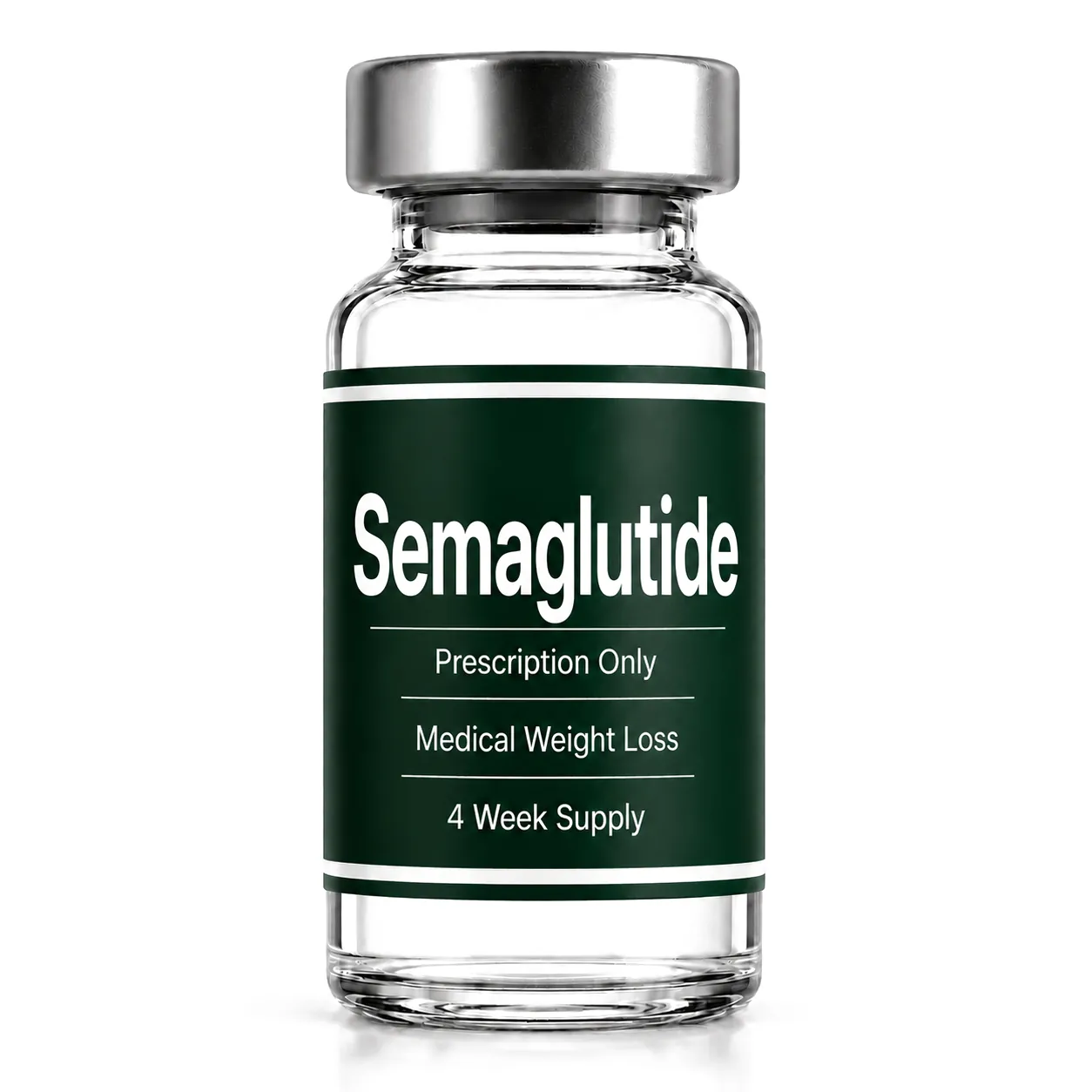
Semaglutide Injection
A quick shot at home, once a week
Your weekOnce a week
MTWTFSS
- Takes seconds, once a week
- Tiny subcutaneous needle
- Dose increases gradually
Best for: a simple once-a-week routine
The weekly GLP-1 that quiets hunger and cravings so weight loss finally sticks, prescribed online and shipped to your door.
Both forms are semaglutide. Pick the routine that fits your life.
A quick shot at home, once a week
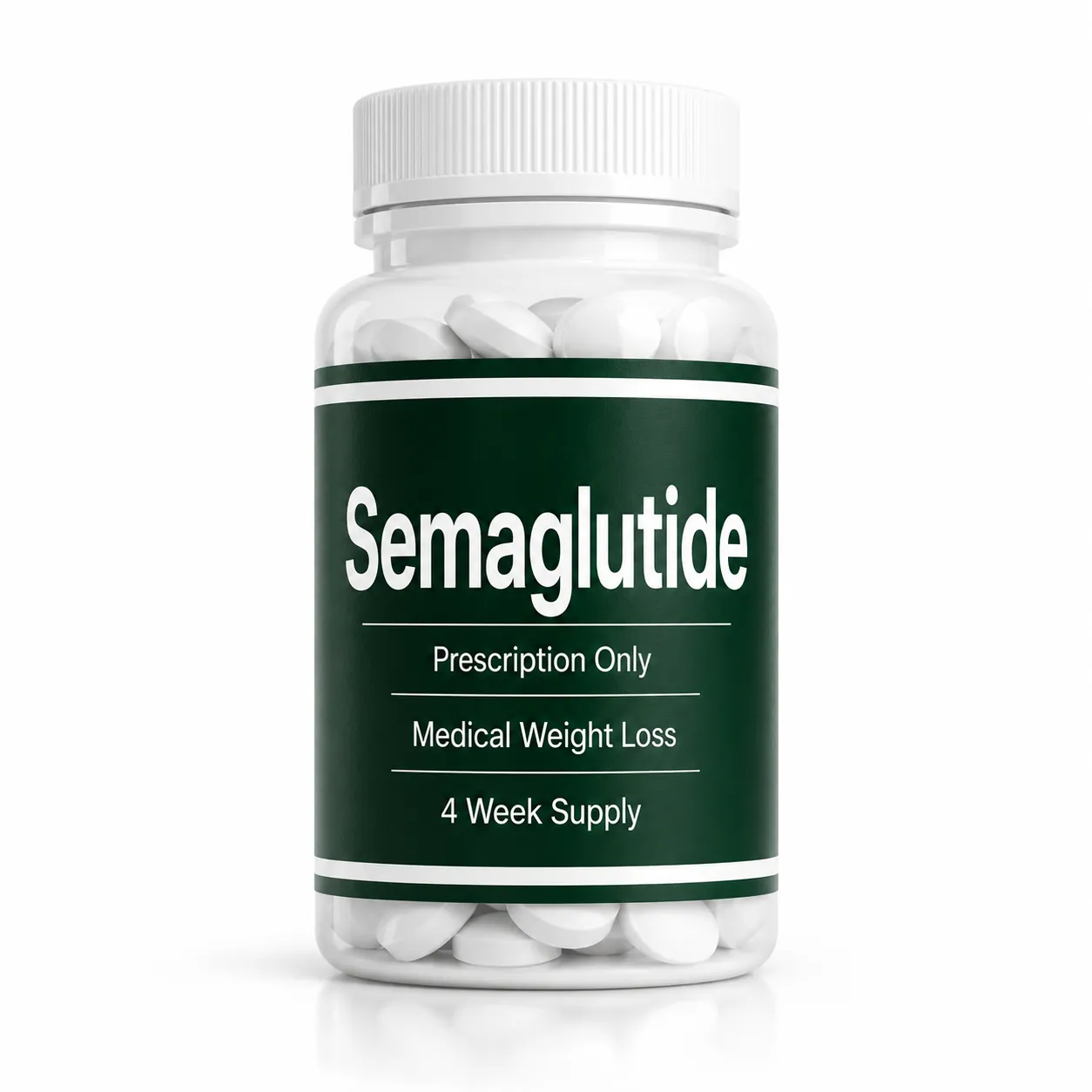
One dissolvable tablet a day
It copies GLP-1, a hormone your gut already makes after you eat, and turns the volume up on feeling full.
Semaglutide reaches your brain's appetite center and turns down cravings and "food noise."
It slows how fast your stomach empties, so smaller meals keep you satisfied.
It helps your pancreas release insulin when you eat, smoothing out spikes and crashes.
In the STEP 1 trial, people on semaglutide lost about 15% of their body weight over 68 weeks, compared with about 2% on placebo.
*Average results from a clinical trial of the FDA-approved medication plus lifestyle changes. Compounded medications were not studied in this trial. Individual results vary.
Follow it through the body, or tap a benefit.
Individual results vary. Your licensed provider will discuss what to expect.






Diets ask you to out-willpower your own biology. GLP-1 medication works with it.
Choose your formAnswer a few health questions online. No appointment, no waiting room.
A licensed provider reviews your answers and prescribes if you qualify.
Compounded at a licensed US pharmacy and shipped straight to you.
Still curious? Read our full guide to Semaglutide.
Read the full guide →A 5-minute assessment is all it takes. Your provider handles the rest, and your semaglutide ships straight to you.
Always consult your licensed provider before starting any treatment program.
This website is for informational and educational purposes only and does not constitute medical advice. Always consult a licensed healthcare provider before starting any treatment. Tides Health is a subscription platform. Fees apply for licensed provider consultations and medication fulfillment. Results and testimonials featured on this site reflect individual experiences and are not guaranteed to be typical. Individual results vary. Results may vary. Individual results depend on adherence to the program and licensed provider recommendations. Tides Health is a patient education platform. Clinical services are provided by licensed providers through our telehealth partner. Tides Health does not practice medicine. If you are experiencing a medical emergency, call 911 or go to your nearest emergency room immediately.