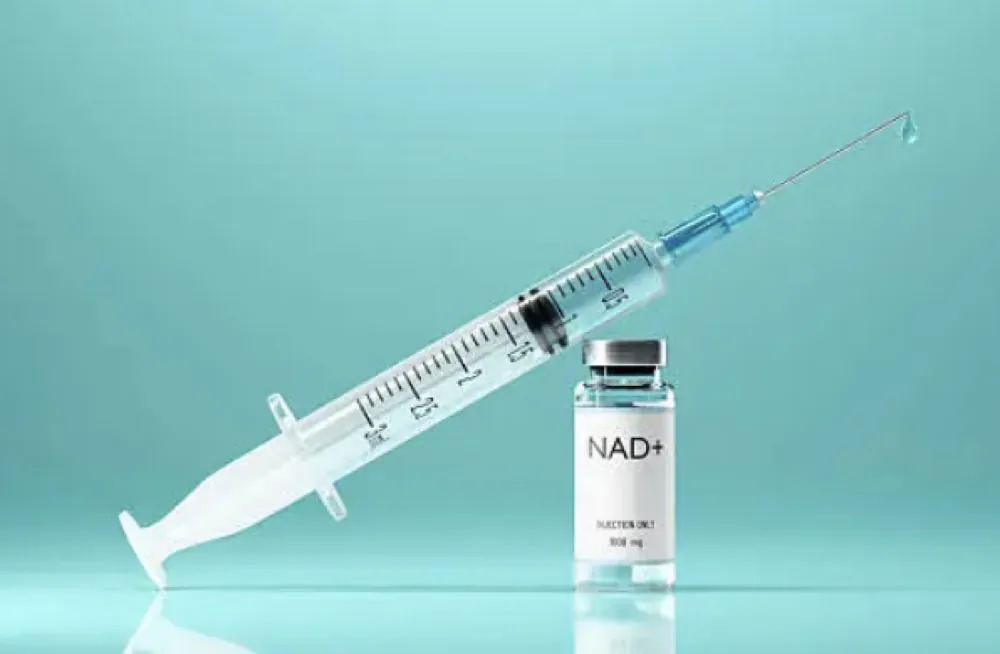
What is NAD+?
NAD+ is a coenzyme present in every living cell — it is essential for hundreds of metabolic reactions, including the conversion of food into cellular energy (ATP), DNA repair, and the regulation of proteins called sirtuins that control aging and stress responses. Your body produces NAD+ naturally, but levels decline by roughly 50% between ages 40 and 60.
NAD+ therapy replenishes these declining levels through IV infusion, subcutaneous injection, or oral precursors (like NMN or NR). Clinical IV infusions deliver NAD+ directly into the bloodstream for maximum absorption, while injections offer a more convenient option. Oral precursors are less bioavailable but more practical for maintenance dosing.
Why clinicians are excited about NAD+: Declining NAD+ is increasingly seen as a root cause of age-related metabolic dysfunction. Replenishing it addresses aging at the cellular level — not just the symptoms. For this reason, NAD+ is a cornerstone of most serious longevity protocols. Compare it with BPC-157 vs NAD+.
Key benefits of NAD+
Here is what the research and clinical experience suggest NAD+ can do:
Cellular energy restoration
Directly fuels mitochondria — the cell’s power plants — resulting in dramatically improved energy and reduced fatigue.
Cognitive enhancement
NAD+ supports brain cell health and neurotransmitter function, improving mental clarity, focus, and memory.
DNA repair support
Activates PARP enzymes that detect and repair DNA damage — a key mechanism in aging and cancer prevention.
Sirtuin activation
Activates sirtuins — longevity proteins that regulate metabolism, inflammation, and stress responses at the cellular level.
Addiction and withdrawal support
IV NAD+ has shown strong clinical results in reducing cravings and withdrawal symptoms in substance dependency programs.
Athletic recovery
Supports faster muscle recovery and reduces oxidative stress from intense training.
How does NAD+ work?
Mitochondrial energy production
NAD+ is an essential electron carrier in the mitochondrial electron transport chain — the process by which your cells produce ATP (energy). As NAD+ levels decline with age, mitochondrial function deteriorates, leading to the fatigue and metabolic slowdown that characterizes aging. Replenishing NAD+ restores this process.
Sirtuin and PARP activation
NAD+ is the primary substrate for two critical enzyme families: sirtuins (SIRT1–7), which regulate gene expression, metabolism, and longevity pathways; and PARPs (poly ADP-ribose polymerases), which orchestrate DNA repair. Without adequate NAD+, both systems are impaired — accelerating cellular aging and accumulating DNA damage.
Conversion from precursors
The body can synthesize NAD+ from dietary precursors including tryptophan, nicotinic acid (niacin), NR (nicotinamide riboside), and NMN (nicotinamide mononucleotide). IV and injectable NAD+ bypasses the conversion step and delivers the active coenzyme directly, producing more immediate and potent effects than oral supplementation.
Dosing guide
Dosing varies depending on your goal and method of administration. Always work with a licensed provider to determine your specific protocol.
| Goal | Typical dose | Frequency | Method |
|---|---|---|---|
| NAD+ IV infusion | 500–1,000 mg | Weekly to monthly | IV drip (2–4 hours) |
| NAD+ injection | 100–300 mg | 2–3x weekly | Subcutaneous or IM injection |
| Oral NMN (precursor) | 500–1,000 mg | Daily | Oral capsule |
| Oral NR (precursor) | 300–600 mg | Daily | Oral capsule |
Important: Dosing information here is educational only. The right protocol for you depends on your health history, goals, and body weight. A licensed clinic can prescribe and supervise your treatment safely.
Side effects & safety
NAD+ has an excellent safety profile when administered by qualified providers. The most notable side effects occur during IV infusions and are dose-rate dependent — meaning they are caused by infusing too quickly, not by NAD+ itself.
During IV infusion: Chest tightness, flushing, nausea, and head pressure are common if the infusion runs too fast. These are not dangerous but can be uncomfortable — a good clinic will slow the drip rate if needed. Most side effects resolve within minutes of slowing the infusion.
Injection and oral: Generally very well tolerated. Mild injection site reactions and occasional GI discomfort with oral precursors are the most commonly reported issues. No serious adverse events have been documented in clinical use at standard therapeutic doses.
Related guides: BPC-157 vs NAD+ | Peptides for anti-aging | Sermorelin for longevity